
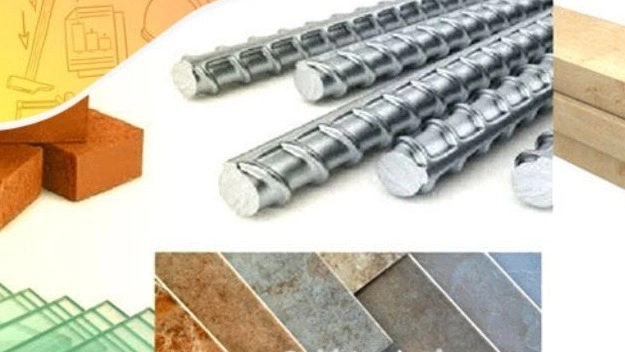
Construction material
Building materials can be generally classified into two natural and artificial sources. Natural materials are those that have been processed by industry, such as wood or glass. Synthetic materials are made after many human manipulations in industrial environments, such as plastics and petroleum paints. Both have their uses.
Apart from tents made of flexible materials such as cloth or skin, mud and string plants are the most basic materials. People all over the world use these three materials to create houses that suit their local climate conditions.
Types of building equipment
Fabric
mud
stone
thatch
wood
Bricks and blocks
Concrete
metal
glass
Ceramics
Plastic
Foam
Cement composites
Building materials in modern industry
Virtual building materials
Construction products
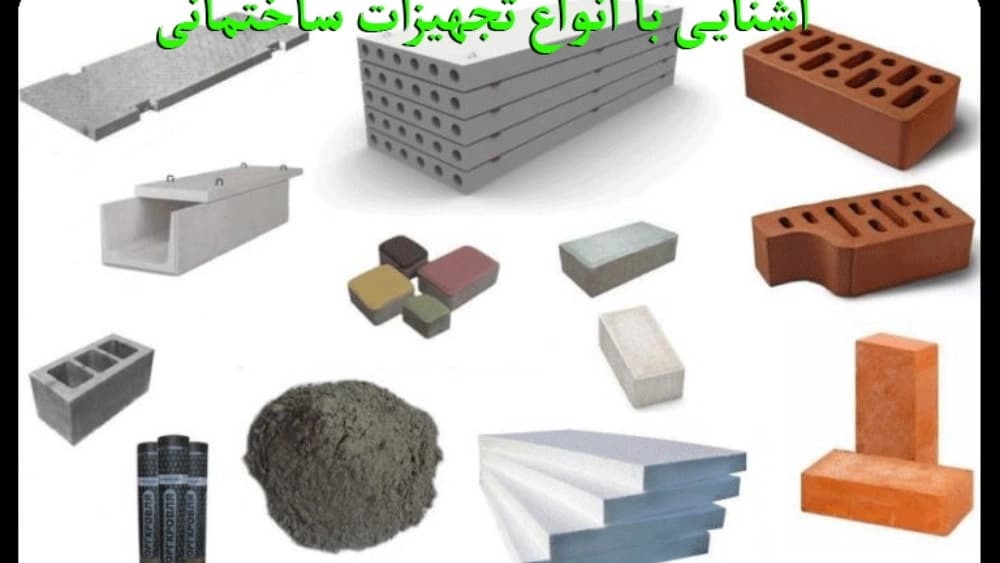
1. Fabric
The tent has been the place of choice for nomadic groups around the world in the past. Two known types include conical and circular. With the development of stretch-type architecture and synthetic fabrics, they have been revived as a major construction technique. Modern buildings can be made of flexible materials such as fabric membranes. and be supported by steel or internal cable system (air pressure).
2. Flower
The amount of each material used leads to different building styles. The determining factor is usually related to the quality of the soil used. Higher amounts of clay usually mean using a clay style, while low clay is usually associated with building clay.
Other main materials include more or less sand/gravel and straw/grasses. At one time, it was made by hand by squeezing clay soil between the boards. Now mechanical pneumatic forms and compressors are used.
Soil, especially clay, has good heat absorption. It is very good at keeping the temperature at a constant level. Houses built with earth are usually cool in the heat of summer and warm in cold weather. Clay holds heat or cold and releases it for a while like stone.
1. Stone
Stone structures have existed as long as history remembers. It is the most durable building material available and is usually readily available. There are many different types of stone in the world, all with different characteristics that make them better or worse for certain uses.
Stone is a very dense material, so it has high resistance. It is difficult to keep the stone warm without using a lot of heating sources.
Dry stone walls have been built as long as humans have placed one stone on top of another. Finally, various forms of mortar were used to hold the stones, cement being the most common type at present. Mainly stone buildings are seen in most big cities.
1. Claim
Straw is one of the oldest known materials. Grass is a good insulator and is easy to harvest. Many African tribes have lived in houses built entirely of grass all year round. In Europe, at one time thatched roofs were common on houses, but with industrialization and improved transportation, this material fell out of favor as other materials became available.
Today, this practice is being revived. For example, in the Netherlands, many new buildings have thatched roofs with special raised tiles on top.
1. Wood
Wood is a product of trees and sometimes other fibrous plants that is used for construction when it is cut or pressed into wood and lumber, such as boards. It is a general building material and is used in almost any type of structure in most climates.
Wood can be very flexible under loads. Maintains strength during bending and is extremely strong when subjected to vertical compression.
Different types of wood, even among the same species, have different qualities. This means that certain species are better for different uses than others.
Historically, wood was used to build large structures in an unprocessed form. Trees were cut only to the required length. Sometimes they were not skinned, and then they were tied together and put in place.
In the past and in some parts of the world, many houses in countries or communities had a personal tree that the family or community planted and used. With the invention of mechanized saws, the mass production of timber was created. This makes the buildings to be erected faster and have uniformity. Therefore, the modern house was built in today's style.
1. Brick and block
Brick is a block made of kiln materials. It is usually clay, but it may be of lower quality than silt. In the ****s, ****s and ****s, brick was widely used as a building material. This was probably because it was very durable compared to wood and very cheap to produce.
1. Concrete
Concrete is a composite building material that is made from a combination of aggregates (composite) and an adhesive such as cement. The most common form of concrete is Portland cement concrete, which is composed of mineral aggregates (generally sand), Portland cement, and water. After mixing, the cement hydrates and eventually turns into a stone-like material.
In order to minimize any air bubbles, which would weaken the structure. The vibrator is used to remove the air present when pouring the liquid concrete mixture around the irons. Concrete is the dominant material in this modern age due to its longevity, malleability and ease of transportation.
1. Metal
Metal is used as a structural framework for larger buildings such as skyscrapers or as an external surface covering.
Different types of metals are used for construction. Steel is a metal alloy whose main component is iron and is a common choice for metal construction. Corrosion during the lifetime is the main weakness of metal.
The lower density and better corrosion resistance of aluminum and tin alloys sometimes overcomes their higher cost. Rice was more common in the past, but is usually limited to special occasions today.
Other metals used include titanium, chrome, gold and silver. Titanium can be used for structural purposes, but it is much more expensive than steel. Chrome, gold, and silver are used as decorations because these materials are expensive and lack structural qualities such as tensile strength or hardness.
1. Glass
Transparent windows have been used to cover small openings in a building since the invention of glass. They provided humans with the ability to bring light into a room while keeping adverse weather outside. Glass is generally made from a mixture of sand and silicate and is very brittle.
Modern glass curtain walls can be used to cover the entire facade of the building. Glass can also be used to cover an extensive roof structure in a space frame.
1. Ceramic
Ceramic is mostly used as a fixed or covering in the building. can be Ceramic floors, walls and even ceilings. Many countries use ceramic roof tiles to cover many buildings.
11. Plastic
The term plastic covers a wide range of synthetic or semi-synthetic organic condensation or polymerization products that can be used as objects or films or molding fibers. Their name is derived from the fact that they are malleable or flexible in their semi-liquid state.
Plastics are relatively high in terms of heat tolerance, hardness and flexibility. Along with this compatibility, the overall uniformity of composition and the lightness of plastics ensure their use in almost all industrial applications today.
12. Foam
Foam is light, easily formed and an excellent insulator. It is usually used as part of a structurally insulated panel where the floor is sandwiched between wood or cement.
1. Cement composites
Cement bonded composites are an important category of building materials. These products are made of hydrated cement paste that binds wood or its particles or fibers together to form prefabricated building components. Various fibrous materials such as paper and fiberglass have been used as glue.
Wood and natural fibers are composed of various soluble organic compounds such as carbohydrates, phenolics, etc. Therefore, before using wood in making composites without cement body, its compatibility with cement is evaluated.
The compatibility of wood cement is the ratio of the parameter related to the composite property of wood cement to neat cement paste. Compatibility is often expressed as a percentage value.
To determine the compatibility of wood cement, methods based on different characteristics such as hydration characteristics, resistance, surface bonding and morphology are used.
1. Building materials in the modern industry
Modern construction is a multi-billion Toman industry and the production and harvesting of raw materials for construction purposes is on a global scale. It is often regarded as a major governmental and commercial key between nations.
Environmental concerns are also becoming an important global issue regarding the availability and sustainability of some materials, and the extraction of large amounts of this amount needed for human habitat.
1. Virtual building materials
Some materials such as photos, images, text may be considered virtual. Whereas, they usually exist on a layer of natural materials themselves. Through the process of representation, they acquire a different quality of prominence than natural materials.
1. Construction products
When we talk about building products, we refer to ready-made particles that are installed in various pieces of architectural hardware and decorative hardware of a building.
The list of construction products exclusively excludes the materials used to construct the building architecture and supporting fixtures such as windows, doors, cabinets, etc.